Band of Brothers, Refined.
​​
-
Historic Hotels of Distinction
-
Intimate Group Size
-
Uncompromising Comfort
-
Exceptional Dining Experiences
-
Guided by Americans

Following Easy Company Is Just The Beginning...

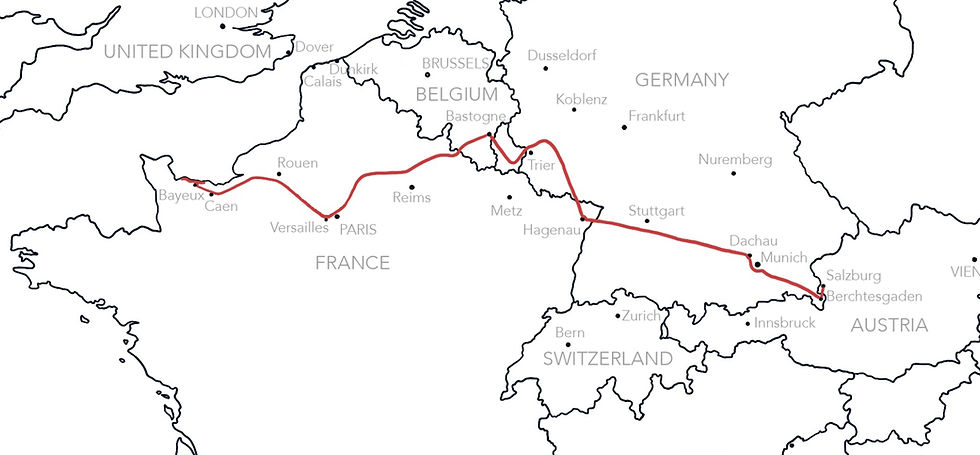
​WHERE WE'LL GO: Exactly how you get to France is up to you. After that, expect us to get you from Versailles to:
Normandy, Utah Beach, Omaha Beach,
Pointe du Hoc, The Battle of the Bulge, Bastogne, Patton's Burial Site, Dachau, Berchtesgaden & The Eagle's Nest.
​
Along the way we'll visit some exciting places you may or may not have heard of: La Fiere Bridge, Carentan, Brecourt Manor, Bayeux, Arromanches, Mulberry Harbors, Sword Beach, Pegasus Bridge.
​
We'll also visit Foy, Germany's Mosel & Rhine Rivers, Haguenau, Munich, The Alps, Obersalzberg, the Berghof ruins, & Salzburg.
​
​WHAT ELSE IS INCLUDED: A private stay at our own Castle in Bastogne, Elegant Châteaus, Remarkable Villas, Historic Residences, Michelin Guide Dinners, Farm-to-table Lunches & Sumptuous Breakfasts.
We build in time for Shopping Breaks, Local Specialty Tours, Regional Wine, Brandy & Schnapps tasting, and free time to simply enjoy some of the best Europe has to offer.
​
Tours fill quickly and capacity is limited to 12 Couples per tour. Early reservations are recommended.
​​
DEPARTURE DATES
​
2026
​​​
SPRING TOUR: May 22 to June 3, 2026
9,250 per person based on double occupancy. 998 deposit per couple.
Your deposit applies in full towards the total.
No additional fees.
(Only 7 Rooms Left)
​
SUMMER TOUR: June 12 to June 24, 2026
9,250 per person based on double occupancy. 998 deposit per couple.
Your deposit applies in full towards the total.
No additional fees.
(Only 6 Rooms Left)​
​
FALL TOUR: September 4 to 16, 2026
9,250 per person based on double occupancy. 998 deposit per couple.
Your deposit applies in full towards the total.
No additional fees.​
(Only 8 Rooms Left)
​
OCTOBER TOUR: October 2 to 14, 2026
9,250 per person based on double occupancy. 998 deposit per couple.
Your deposit applies in full towards the total.
No additional fees.
(SOLD OUT)
​​​​​​​
2027
​
SPRING TOUR: May 21 to June 2, 2027
Reserve now for 2027 and lock in 2026 rates.
(Only 9 Rooms Left)
​
SUMMER TOUR: June 11 to June 23, 2027
Reserve now for 2027 and lock in 2026 rates.
​
FALL TOUR: September 3 to 15, 2027
Reserve now for 2027 and lock in 2026 rates.
​
No hidden administrative costs.
Most dining is included: all twelve breakfasts, four lunches and six dinners. The total includes all taxes, fees, entry tickets, and museum tickets.
​
Hoadley & Blake cover all driver tips.
​
Guides do not accept additional tips. (We're the owners!) ​
A QUICK ITINERARY
(Scroll down for more detail.)

DAY 1 - PARIS/VERSAILLES Arrival In Europe
DAY 2 - VERSAILLES TO NORMANDY
DAY 3 - AIRBORNE LANDINGS, ST. MÈRE ÉGLISE, & UTAH BEACH
DAY 4 - OMAHA BEACH, POINTE DU HOC, MULBERRY HARBOR
DAY 5 - SWORD BEACH, PEGASUS BRIDGE, CASTLE ARRIVAL BASTOGNE
DAY 6 - BATTLE OF THE BULGE, MUSEUMS, FOXHOLES, FOY
DAY 7 - PATTON'S BURIAL SITE, THE RHINELAND
DAY 8 - HAGUENAU, EASY COMPANY SITES, MAGINOT LINE, GERMANY
DAY 9 - DACHAU CONCENTRATION CAMP, BERCHTESGADEN
DAY 10 - EAGLE'S NEST, BERGHOF, OBERSALZBERG BUNKERS
DAY 11 - SALZBURG IN WW2
DAY 12 - MUNICH IN THE NAZI ERA
​
DETAILED ITINERARY
DAY 1 PARIS/VERSAILLES
ESSENTIALS
-
Land at Paris' Charles de Gaulle (CDG) Airport
-
Taxi to Versailles
-
Treaty of Versailles Tour (optional)
-
Welcome Dinner

DETAILS
Land at Paris' Charles de Gaulle (CDG) Airport and travel to Versailles in time for the evening welcome dinner. We depart for Normandy tomorrow morning after breakfast. Travel time from the CDG airport to Versailles is about one hour and fifteen minutes.
​
Hotel check-in time is 3:00 PM.
​
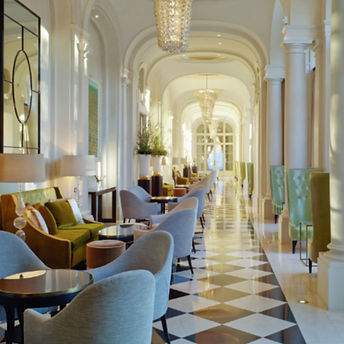
Whether you've arrived in France today, or you've been in Europe for a few days, today is the day to find your way to Versailles. When you arrive, we think you'll be absolutely thrilled to be welcomed at your five-star hotel near the palace.
Our hotel tonight served for a time not only as Eisenhower's HQ, but was also visited by Hitler's Architect, Albert Speer both before the war, and as a prisoner afterwards. Patton, Bradley, de Gaulle and Monty all spent time here as well.
​
The hotel's reception salon is where Georges Clemenceau dictated the conditions of the Treaty of Versailles in 1919.
​​​
If you've got the energy, we'll be leading an optional afternoon tour of the Hall of Mirrors at the adjacent Palace of Versailles to see where the infamous Treaty of Versailles was signed at the end of World War I. ​
​​​
We'll meet as a group for the Welcome Dinner in the hotel's restaurant. Expect specialties like Langoustine ravioli in lemongrass bisque, line-caught sea bass with caviar and milk-fed veal with truffle jus. We can't wait to meet you!
​
(Actual hotel photo.)
​

DAY 2 VERSAILLES TO NORMANDY
ESSENTIALS
-
​Luxury Coach to Bayeux
-
Lunch in Honfleur
-
Norman History
-
Bayeux Cathedral
-
​Bayeux War Museum
-
Bayeux War Cemetery
-
Robert Capa Memorial
-
Hemingway & Eisenhower's Hotel

After a stunning breakfast buffet, you’ll board our luxury air-conditioned coach for the journey to Normandy.
​
Enjoy panoramic window scenes and spacious seating as we pass through the land of Richard the Lionheart’s castles and Monet’s famous gardens at Giverny. Crossing Thor’s Island, we’ll enter into the Viking-conquered, French-ceded territory of the north men.​
​
In addition to being the site of D-Day landings, Normandy is also well known for its brandy, apples, pears, seafood, crème fraîche, camembert, and highly prized butter - famous for its rich flavor and creamy texture. We’ll be diving in to all of it.
​​
For lunch we often stop in the picturesque port town of Honfleur, renowned for its beautiful old harbor and colorful 16th to 18th-century townhouses. An excellent destination for seafood and an inviting place to stretch your legs in a town that inspired Impressionist painters. Monet painted many scenes here.
​​​​
Arriving in Bayeux, you can settle into a leather armchair in your hotel’s elegant, unpretentious bar. Above you are signed vintage wartime photographs from some very famous and familiar earlier visitors. This hotel was a hotbed of senior military activity during the war. Enjoy a perfectly chilled glass of Chablis or regional pear brandy as you unwind and imagine a bygone era.
​
Your accommodations were a central hub for war correspondents. Ernest Hemingway and Ernie Pyle visited frequently to write up their reports on the Normandy Campaign.
Eisenhower himself preferred to dine here from his HQ only 12 miles away.
​
We'll lead an optional walking tour in the afternoon. From the hotel we'll pass the impressive Bayeux Cathedral and walk through the village to the Museum of the Battle of Normandy. The museum is modest, but has several larger hardware pieces and a memorial to legendary combat photographer Robert Capa.
Across the street is the Bayeux War Cemetery dedicated largely to British and Commonwealth soldiers. If you have the energy and the inclination, the Commonwealth War Graves Commission provides a free app that can guide you through the cemetery.
​
For dinner, you’ll be seated in our hotel dining room that was once frequented by a wide range of Allied officers. The cuisine is classic Norman local seasonal offerings embellished with Asian touches: perhaps a starter of scallops in beurre blanc, followed by tender duck confit or sole meunière, paired with a thoughtfully selected regional wine. Enjoy an evening that is both intimate and grand.
​
(Actual hotel photo.)

DAY 3 AIRBORNE LANDINGS & UTAH BEACH
ESSENTIALS
-
Band of Brothers Episode 2 "Day of Days", Episode 3 "Carentan"
-
Battle of Carentan
-
St. Mere Eglise
-
Airborne Museum
-
Brecourt Manor
-
82nd Airborne
-
Utah Beach
After a stunning Normandy breakfast including (but not limited to) local double-cream butter, brie and pastries, we’ll visit several sites related to the American Airborne parachute and glider drops made after midnight, the night of the D-Day beach landings. ​
​
We’ll visit one of the best interactive museums in the area and make a stop in Carentan before heading to St. Mere Eglise for lunch. We'll take some time to visit this small town so central to the story of June 6, 1944. The Airborne Museum is a highlight.
​
During both the morning and the afternoon we’ll visit Band of Brothers Easy Company monuments in the area like Brecourt Manor and the 101st Dick Winters Monument.
We’ll also take a walking tour of the 82nd Airborne’s battle at La Fiere Bridge led by assistant division commander Brigadier General James M. Gavin. Today a beautiful meadow along a river. In 1944, one of the most hotly contested pieces of ground in World War 2.
​
In the afternoon we’ll head to Utah Beach. Wide, windswept stretches of sand with memorials and echoes of D-Day. You'll have time to walk along the dunes and imagine an endless horizon of ships, planes and men in the English Channel. You can even climb inside a Higgins boat to try and imagine the experience of those brave young men on that day.​
​
With a little luck and timing, we have an additional behind-the-scenes opportunity at Utah Beach.
​​
For dinner tonight, you'll be able to choose from among several Michelin Guide recommended restaurants in the small town within easy walking distance. We'll provide you with our own restaurant guide that we've carefully researched.
​
(Actual hotel photo. Where Hemingway used to drink.)

DAY 4 OMAHA, POINTE DU HOC, MULBERRY HARBOR
ESSENTIALS
-
Omaha Beach
-
American Cemetery
-
Pointe du Hoc
-
Mulberry Harbor

After another farm-fresh Normandy breakfast, our first stop will be Omaha Beach.
​
The vast stretch of sand is eerily quiet today. Occasional hang gliders catch the breeze while locals race horse carts along the beach. A stark contrast to the fierce battle that took place here in 1944.
​
You'll have time to walk from the sea to the high bluffs above the beach imagining the harrowing moments faced by the soldiers of the veteran 1st (Big Red One) and the untested 29th Infantry Divisions as they suffered the terrible onslaught of German guns.
​
After we depart the beach, we'll drive up to where The 1st fought their way up between the cliffs. Today, perched on the bluffs, this is now the hallowed ground of the Normandy American Cemetery. A place of solemn reflection where row after row of white marble crosses and Stars of David stretch across the immaculate green lawn. A place where French children of all ages visit to lay flowers at the graves of their great-grandparent's liberators.
​
Life must go on, and we’ll celebrate the freedom and peace of today, after a stirring morning, with a special lunch. We’ll be dining in the picturesque setting of a lovingly restored 12-century farm with its old fortified stone tower still standing, bearing witness to the vestiges of time for a thousand years.
​
The restaurant was a château that formerly served as a military HQ for the U.S. Army Corps of Engineers. We’ll dine in the garden where G.I.’s used to gather at what they called “Dead Eye Joe’s Bar”.
​
The seasonal lunch menu is prepared by three brothers from the 4th generation of family to live and work the farm. Brothers who feel a special connection to the United States. The suitcases near the bar are the very ones their grandfather used when he left France in 1944 to study in Michigan.
​
Under shady trees and dappled sunlight, we’ll enjoy Normandy’s flavors, culture, and family heritage. You can try lobster rolls, cod fritters, pulled-pork burgers, entrecôte, scallops, impeccable brioche French toast and 'tarte Normandie' - chased by grandfather’s favorite champagne or a local cider.
​​​
In the afternoon, we’ll travel up to Pointe du Hoc. Perched on dramatic cliffs between Utah and Omaha Beaches, this strategic high ground was stormed by U.S. Army Rangers in a daring assault under heavy fire, followed by days of fierce fighting to hold the position.
​
You’ll see the shattered remains of German bunkers and artillery casemates surrounded by deep bomb craters that still scar the earth. Silent witnesses to the intense Allied bombardment that preceded the assault.
​
We’ll then make the journey down to Arromanche to view the remnants of one of the two Mulberry Harbors that were the secret weapons keeping Allied forces supplied while surprising and alarming the Axis.
​
You’ll be able to clearly see, and even walk among many of the massive concrete caissons - code-named “Phoenixes” that helped change the course of WW2.
These giant man-made blocks allowed the Allies to unload troops, tanks, and supplies at a staggering rate. An unforgettable stop where innovation met courage and helped ensure victory.
​
(Lunch in Normandy.)

DAY 5 SWORD BEACH, PEGASUS BRIDGE, OUR PRIVATE CASTLE IN BASTOGNE
ESSENTIALS
-
Sword Beach
-
Pegasus Bridge
-
Compiégne
-
Bastogne
-
Private Legendary Castle

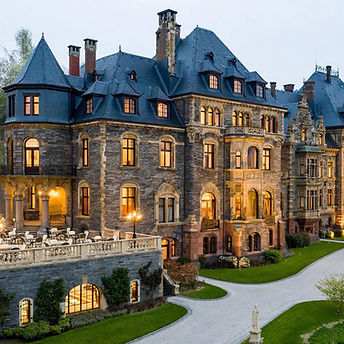
(Our castle hotel in Bastogne.)
​
With so much left to see, today is a travel day as we leave Normandy and head to Belgium for a fascinating stay in Bastogne.
We'll stop at Sword Beach to see some important monuments that come with great stories. It's also a chance to gauge the distance that had to be traveled from the beach on D-Day to reach the men who had flown in at midnight further down the road.
​
We'll drive upstream to visit Pegasus Bridge and learn the incredible story of the first men to land on June 6. If you don't know the story of Pegasus Bridge, get ready for a good one.
​​
Leaving Normandy, we'll stop at a quiet glade in the forest where the WWI Armistice was signed in 1918, and where France surrendered to Germany in 1940. A replica of the railcar where the ceremonies took place stands inside a museum on the exact spot where the original once rested. The original was destroyed by Hitler in a symbolic act of revenge.
​
The surrounding monuments, stoic and understated, commemorate the millions lost in the Great War. This is where the fate of many empires shifted in the stillness of the woods.
​
When we arrive in Bastogne, we'll be staying in our own ancient castle. Dinner will be catered and brought to you on the large stone patio overlooking a series of terraced lakes.
You'll be staying on private land in the exact place where hundreds of paratroopers huddled in December 1944, trying to stay warm.
​
Only 600 yards away, two Panzer IV tanks and five self-propelled guns attacked the château on Christmas Morning of 1944 and were destroyed. Patton's 3rd Army punched through the next day.
Your castle was the 101st Airborne's 502nd Regimental command Post.
​
Patton himself visited the castle five days after Christmas, together with General McAuliffe, to award the Distinguished Service Cross to "Silent Steve" General Steve Chappuis. Patton also wanted to see the remains of the tank battle.
​​
After dinner, you’ll have the chance to walk* through the farmland and forests of the private estate and imagine what took place here. General McAuliffe said of that morning,"I continued to warn my infantry that the tanks would break through, and that they were to be mentally prepared for such penetrations... Well they did break through - the chief breakthrough coming on Christmas morning - and they got it from all sides."
​
*Mountain bikes are also available if requested in advance.
​
​(11th Century Castle room in Bastogne.)

DAY 6 BASTOGNE MEMORIALS AND MUSEUMS
ESSENTIALS
-
101st Airborne Museum
-
Bastogne War Rooms
-
Bastogne Cemetery
-
Tiger Tank
-
Mardasson Memorial
-
Easy Company Memorial & Foxholes
-
Band of Brothers Episode 6 "Bastogne"
-
Foy Sniper Building
-
Jeep Tour

(Your castle accommodations in Bastogne.)
​
Today is all about The Battle of the Bulge.
After a catered breakfast at the castle, we’ll head into town to visit the legendary 101st Museum, and the Bastogne War Rooms. Bring some Euros - the 101st Museum sells a selection of original WW2 items in their gift shop - and they only take cash.
We’ll visit the cemetery where nurses Reneé Lemaire and Augusta Chiwi are laid to rest.
​
We’ll travel north to Houffalize, where after a fantastic lunch you’ll have a chance to stroll through the beautiful village on the river Ourthe, and visit their newly restored German Panzer on display.
​
After lunch we’ll visit one of the largest World War 2 memorials in Europe and then head to the woods to see Easy Company’s foxholes on the forest hill overlooking Foy. A tremendous site where Cpt Richard Winters’ men were dug in from Dec. 20, 1944 to Jan. 4, 1945 in the extreme cold.
​
We’ll drive through the village of Foy and see where one of the most dramatic scenes depicted in Band of Brothers took place (Episode 6).
​
In the afternoon, you'll have the opportunity to ride in an authentic WW2 Jeep around the grounds of your private 11th Century Castle Estate.
​
As guests of the private family that owns the castle, you will have full access to the extended grounds during your stay. Hike the trails, stroll the ponds and pine forests. Mountain bikes are available on request.
Officers from the 101st Airborne stay here every December.
​​
You'll have some free time to explore the village of Bastogne in the evening and enjoy dinner in the restaurant of your choice before we take the short ride back to our accommodations.
​
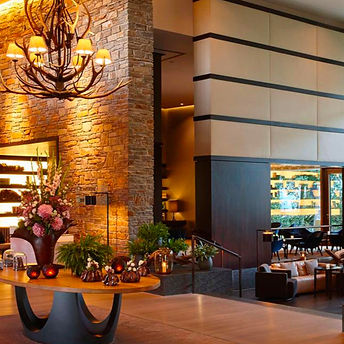
(Castle lounge area.)

DAY 7 PATTON'S BURIAL SITE, THE RHINELAND
ESSENTIALS
-
Battle of Vianden
-
American Cemetery
-
Patton's Burial Site
-
Easy Company Burial Sites
-
Mosel River

(Actual hotel photo.)
Today we leave Belgium behind and travel into Luxembourg. Our first stop is in Vianden, where the Luxembourg Resistance, with support from the U.S.A., fought a heroic battle against the Germans. We think you'll love both the story and the view!
​
Traveling south, we'll visit the immaculate, informative, and deeply moving Luxembourg American Cemetery. Burial site not only to Patton and many members of Easy Company featured in the Band of Brothers, but also to a Medal of Honor recipient and heroic career officer Lansing McVickar. 5,070 American soldiers are laid to rest here. 371 missing soldiers are also memorialized.
​
We'll cross the border into Germany and drop into the ancient Roman settlement of Trier for a short visit and lunch.
After lunch we're off down the Mosel River to some exciting accommodations. The Mosel is a famous wine region of Germany and we'll be looking to pop a few corks with dinner.
​
(Actual hotel photo.)

DAY 8 HAGUENAU, EASY COMPANY, GERMANY
ESSENTIALS
-
Lorraine American Cemetery
-
Band of Brothers Episode 8, "The Last Patrol"
-
Easy Company Sites
-
Maginot Line
-
Baden-Baden
​

(Actual hotel photo.)
​
After a leisurely breakfast, we'll be heading south and back into France. Our first stop today is at the Lorraine American Cemetery. This is the largest WW2 cemetery in Europe with 10,500 American soldiers who died in action. Second only to the Meuse-Argonne American Cemetery from WWI where 14,250 Americans rest.
​
Most of the soldiers buried here died in the autumn of 1944 during the Allied advance from Paris to the Rhine. Mainly from the U.S. Third and Seventh Armies.
​
As we continue traveling south east we'll pass through the Vosges mountains, some of the most fiercely held territory that Germany fought bitterly for and considered part of their homeland. We'll visit an ancient castle that looks out over the plains of Alsace.
​
This is a region that has been hotly contested for thousands of years. During WW1 there was almost continuous fighting in the mountains. In WW2 this is where the 36th Infantry (Texas Guard) became the Lost Battalion, cut off and stranded under heavy fire, only to be liberated by the U.S. 442nd Regiment of Japanese Americans.
​
We'll descend from the hills into the town of Haguenau and tour the familiar haunting sites from Band of Brothers, Episode 8 where Easy Company was tasked with nighttime raids across the Moder River.
​
After Haguenau, we'll travel a short distance to see a fascinating remnant of the infamous Maginot Line that has been turned into a museum.
​
For dinner - and a lovely place to spend the night - we're headed across the Rhine and back into Germany where we'll be staying in luxurious accommodations and enjoying a wonderful dinner. ​​
​
(Actual hotel photo.)

DAY 9 DACHAU, BERCHTESGADEN
ESSENTIALS
-
Kaufering IV Cemetery
-
Band of Brothers Episode 9 "Why We Fight"
-
Dachau Concentration Camp
-
Obersalzberg

(Actual hotel photo.)
​
It was the first, and it led to the worst. We're going to cross Bavaria today in order to reach the Dachau Concentration Camp outside Munich. If you've never been to one, visiting a German WW2 concentration camp is a life-changing event.
​
Before we get to Dachau, we'll visit the Landsberg Kaufering IV cemetery in the area where several Dachau sub-camps were liberated by the 12th Armored Division, 101st Airborne Division, and the all-Japanese American 522nd Field Artillery Battalion. This was the liberation depicted in Band of Brothers Episode 9 "Why We Fight".
​
Dachau itself opened on March 22, 1933. Less than two months after Hitler came to power. It served as a prototype model for the dozens of camps to come.
Initially for political prisoners, there was a rhyme in Germany as early as 1935 that (translated) went,"Dear God, please make me mute, so that I don't get sent to Dachau." No 1st Amendment in Nazi Germany. Even your words could get you sent away.
​
In the afternoon we'll wind our way down into the foothills of the Alps, pass through Berchtesgaden, and climb up to the mountain retreat of Obersalzberg.
We'll see the more infamous sights in this area tomorrow. For today, we'll be staying in a grand five star hotel built over the top of what used to be Hermann Goering's vacation home. We'll have dinner together.
​
(Actual hotel photo.)

DAY 10 EAGLE'S NEST, BERGHOF, BUNKERS
ESSENTIALS
-
Eagle's Nest
-
Berghof
-
Bunker Museum
-
Berchtesgaden
-
Band of Brothers, Episode 10 "Points"

(Not all breakfasts are the same.)
​
We've got an early breakfast with an incredible view, but unlike most tours who drive in from as far away as Munich, we're very close to the start of our journey today. 4 minutes away, as a matter of fact. You'll exit our luxury coach to board one of the first buses of the morning that will take us on an adventure up a winding road to a mountain tunnel. After a ride in a golden elevator, we'll arrive at about 6,000 ft where you'll get to spend some uninterrupted time exploring what American troops called the 'Eagles Nest' and Germans call the Kehlsteinhaus.
​
The views can be spectacular from this vantage point. The building itself is quite a wonder. Commissioned by the evil Martin Bormann in 1937, it was paid for by the Nazi Party and built in only 13 months.
​
Today you can sip a cappuccino by the fireplace of red Italian marble that was donated by Benito Mussolini. The building was inaugurated by Hitler on his 50th birthday. There's also a short walk you can take to reach a new height above the house for some commanding views of the world around you.
​
When we descend back down to the Obersalzberg area, we'll head over to the Documentation Museum to learn more about the area that senior Nazis used as a mountainside retreat. The museum sits on top of the extensive bunker system that you'll also be able to explore.
​
If you've got the energy, and the right shoes on, we can walk together down a somewhat steep incline to the former site of Hitler's 'Berghof'. A home that grew in grandeur during the Nazi years to become almost a second capital to the Reich as Adolf would spend months at a time here, all the way up to July of 1944.
When the American military took over the region they destroyed more than 50 Obersalzberg Nazi buildings, including the Berghof. Today we can stand on the concrete base that remains and be glad that it, and they, are gone.
​
In the afternoon we'll head down to the village of Berchtesgaden for a driving tour of the local area and dinner at one of the many open-air establishments.
​
(Actual dining in Bavaria.)

DAY 11 SALZBURG IN WW2
ESSENTIALS
-
Salt Mines
-
Nazi Escape Routes
-
Alpine Lunch
-
Schnapps Distillery
-
Salzburg in WW2
-
Free time in Salzburg

(Actual hotel photo.)
​
Our first stop of the day will be a visit to one of the local salt mines in Berchtesgaden.
Salt mines in Germany and Austria served as huge repositories for the art and gold Nazi's had looted from across Europe.
​
At one mine, as Eisenhower, Bradley & Patton were being lowered on a jittery elevator into the mineshaft to see the gold, Patton said that if the elevator cable snapped,"Promotions in the U.S. Army would be considerably stimulated." Ike told Patton to lay off the jokes until they were above ground.
The salt mine we'll visit today is completely safe, with no jittery cables.
One of the Nazis last-ditch escape routes is in our area. It also happens to be one of Hitler's favorite places to visit back in the 1930s. We'll take you there and tell you the story. It's stunning. It's on a lake. We think you'll find it interesting.
After lunch with a view, we'll make a stop at a 330-year old Schnapps factory to taste some of the local wares. The distillery has a very large shop with more than just spirits for sale and is a great place for gift buying.
The ride into Salzburg isn't long, and it is quite beautiful. We'll be staying in the heart of the city at a hotel we are sure you're going to love. This location puts you front and center in one of the most exciting and beautiful towns in Europe.
In addition to the great food and shopping, Salzburg had a number of infamous roles during the war. We'll talk about some of what happened there so that you have a full picture.
​
Dining options in Salzburg abound and you'll be happily on your own tonight to enjoy your favorites. We'll also provide a local restaurant guide to help you search for something memorable.
​
(Actual hotel photo.)

DAY 12 SALZBURG TO MUNICH
ESSENTIALS
-
Munich Walking Tour
-
Hitler's Early Years
-
Famous Beerhalls
-
The 1923 Putsch
-
Peace In Our Time
-
The White Rose
-
Blowing Up Nazi Buildings: the Ehrentempel

(Actual hotel photo.)
​
Today we'll travel back up into Germany to Munich. After a walking tour of the city the tour officially ends tonight at our hotel.
​
A lot happened in Munich back when it was a hotbed of early Nazi activity in the 1920s. A lot happened throughout the Nazi regime right up until the end. There's nothing quite like seeing where it all happened to have a better understanding of how deeply involved this city was in the formative years of Adolf Hitler, the Nazi manipulation of art and legends, the resistance, and the American occupation starting in 1945.
​
We'll see the streets and cafes of the student district where young Adolf Hitler spent time. We'll visit a beer hall that only this century painted over its swastika flags. We'll walk the route of the Nazis' 1923 attempt to take power by force. See where Chamberlain last met with Hitler to secure 'Peace in our time.' Explore the hall at the University where young German resisters to the regime sealed their fate. And visit a museum next to where the U.S. literally blew up a Nazi temple to wipe it from the face of the earth.
​
Munich is also one of the most beautiful and beloved cities in Germany. Its history before and after the war far exceeds what happened under Hitler. Munich holds some of the most incredible art museums, parks, cathedrals, shopping, and dining to be found Europe.
This may be the last day of busy activity on the tour, but it's a special one that we always look forward to. We'll share a last dinner together tonight. Tomorrow, on day 13, after a last amazing breakfast, you can head to the airport, or continue your journey in Europe as you see fit.
​
(Actual hotel photo.)